The healthcare sector is changing quickly through the use of AI and robotics, which means that the doctors’ methods in diagnosing, treating, and operating have been changed completely. Innovations, such as accurate diagnostics and robot-assisted surgeries, among others, have a patient care that is faster, safer, and more precise.
Tieten Medicity is the hospital where modern healthcare standards with the highest treatment precision, diagnostic exactness, and patient safety are set through innovative and humane AI-powered technology and robotic surgery systems.
The use of AI in medicine is indeed a revolution thanks to smart algorithms and deep learning that identify diseases faster and with better precision.
AI is not a replacement for doctors; it is a partner that provides doctors with timely data for more intelligent and safer patient care.
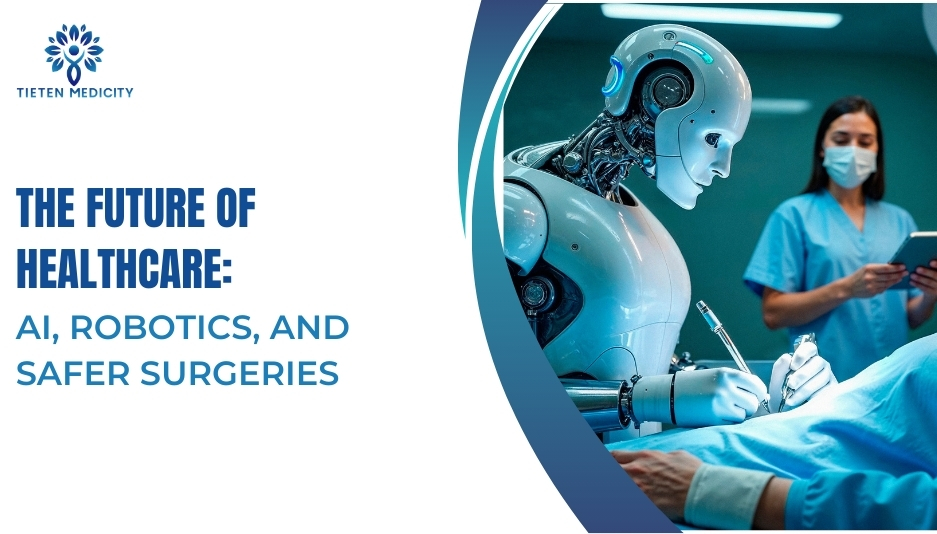
Robotic surgery is one of the most thrilling technological steps forward in the field of health care. By bringing together the skills of a surgeon and the exactness of a robot, it reduces the number of risks associated with surgery and at the same time, enables the patient to recover more quickly.
Surgeons at Tieten Medicity are enjoying the benefits of robotic-assisted surgeries, which have made it possible to carry out intricate operations with astonishing precision. The robotic arms work through tiny cuts resulting in:
Robotic technology gives more sight and control to the surgeons, thus letting them get to the body areas that would normally be hard to reach with usual tools.
The combination of AI and robotics is one of the factors that greatly impact the safety of surgeries. One of the most important areas of AI support is pre-operative planning. Where three-dimensional visualization of the patient is made using different medical images and predicting the possible risks is provided. During the operation, the information is fed to robotic devices that are in control of surgical instruments, thus precision is ensured. After the surgery, AI takes over the monitoring of the recovery process and early detection of any irregularities.
The regular process of learning and adaptation guarantees that surgical methods will be improved and that their safety and efficiency will continue to be the main concerns.
The health care industry is going to be determined by the joint forces of integrated AI systems, robotic innovations and human expertise. Hospitals like Tieten Medicity are at the first place of this change by applying technology that not only improves patient outcomes but also keeps empathy at the center of treatment.
The development of AI and robotics is not just going to make surgery less risky for the patient, it is also going to reduce their recovery time and offer them a special healthcare service, which is going to transform the idea of modern medicine.
Ans: Robotic surgery can treat a wide range of conditions, including urological issues, gynecological disorders, gastrointestinal problems, generak surgeries, head and neck surgery, and certain cancer-related procedures.
2. How many hours does robotic surgery take?
Ans: Most robotic surgeries take 1 to 4 hours, depending on the type of procedure and the patient’s condition.
3. How painful is robotic surgery?
Ans: Pain is usually mild to moderate because the incisions are small. Most patients experience far less pain than with traditional open surgery.
4. How long is recovery after robotic surgery?
Ans: Recovery is typically quick—many patients resume normal activities within a few days to 2 weeks, depending on the procedure.
5. What are the benefits of robotic surgery?
Ans: Key benefits include smaller incisions, less pain, minimal blood loss, reduced infection risk, shorter hospital stays, and faster recovery with improved surgical precision.
Dedicated to providing exceptional care with compassion and innovation. Our state-of-the-art facility offers a wide range of medical services and specialties to ensure the best outcomes for our patients. Committed to your health and well-being, we’re here to support you every step of the way.
© 2026, TIETEN MEDICITY. All Rights Reserved.
 Call Now!
