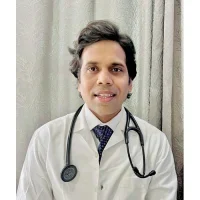

MBBS, MS (Gen. Surgery), MCH (CVTS),
BNB (CVTS) (Gold Medalist)
Robotic, Cardiothoracic & Vascular Surgeon
Heart disease is a disease that impacts millions of people annually and has been a significant cause of long-term health problems. Angioplasty, also referred to as percutaneous coronary intervention (PCI), is a minimally invasive procedure that is performed to open blocked or narrowed arteries back to their proper size. At Tieten Medicity Hospital, angioplasty in Thane is performed using advanced cardiac technology by experienced interventional cardiologists.
Angioplasty is a procedure involving the opening of blocked or narrowed coronary arteries, which supply the heart with blood. A catheter is a thin and flexible tube that is inserted either into the radial artery (wrist) or femoral artery (groin) and directed into the affected vessel. At the end of the catheter is a small balloon, which is inflated to enlarge the artery. Mostly, a stent is inserted to aid in keeping the artery open in the long run.
Angioplasty should be used where accumulation of plaque (atherosclerosis) seriously impairs blood flow to result in symptoms or severe heart problems, including:
Angioplasty, in the case of a heart attack, is the universal emergency intervention since it restores the supply of blood and prevents damage to heart muscles as quickly as possible.
Angioplasty is done in a cardiac catheterisation laboratory under local anaesthesia and, in some cases, general anaesthesia and mild sedation. The procedure includes:
Depending on the complexity, the procedure normally takes between 30 minutes and 2 hours in the artery.
The kind of stent to be adopted will be determined by the condition of the patient:
The choice of stent depends on the size of the artery, the level of blockage and the general health of the patient.
The major advantage of angioplasty is the removal of the blockage. Immediate result in blood circulation.
Even though angioplasty is not very risky, there are some possible risks, such as:
All possible precautions are going to be taken by your cardiologist, who will evaluate risks carefully and make sure that they are safe.
Angioplasty is effective for most patients. The average length of stay is 24-48 hours. It is usually followed by mild pain or bruising at the site of insertion. Post-surgical care involves:
It is necessary to follow medical advice so as to succeed in the long run.
Angioplasty is used to treat clogged arteries and not the underlying heart condition. Lifestyle changes that are required to enhance long-term heart health include:
Healthy habits can be achieved by enrolling patients in cardiac rehabilitation programmes.
Tieten Medicity Hospital is a best hospital for angioplasty in Thane and provides an advanced and proven treatment process for coronary artery blockage and related heart issues. If done in an early stage by skilled professionals along with appropriate medications and lifestyle changes, an angioplasty can work wonders to improve heart and life conditions. An early detection and treatment process is essential in preventing life-threatening heart conditions.
Angioplasty is a minimally invasive procedure used to open blocked or narrowed blood vessels, usually the heart arteries. It helps restore proper blood flow, relieve chest pain, and reduce the risk of heart attack.
Angioplasty is generally not painful. You may feel mild pressure or discomfort during the procedure, but most patients remain comfortable as it is done under local anesthesia.
Before angioplasty, your doctor may advise fasting for a few hours, adjusting medications, and undergoing basic tests. You’ll receive clear instructions to ensure the procedure is safe and smooth.
Angioplasty is considered safe, but like any procedure, it carries small risks such as bleeding, infection, or artery re-narrowing. Your medical team closely monitors you to minimize complications.
Most patients recover quickly and can return to normal activities within a few days. Hospital stay is usually short, and your doctor will guide you on medications, diet, and lifestyle changes for long-term heart health.
The spirit of care under one roof.
With access to
Dedicated to providing exceptional care with compassion and innovation. Our state-of-the-art facility offers a wide range of medical services and specialties to ensure the best outcomes for our patients. Committed to your health and well-being, we’re here to support you every step of the way.
© 2026, TIETEN MEDICITY. All Rights Reserved.
 Call Now!