
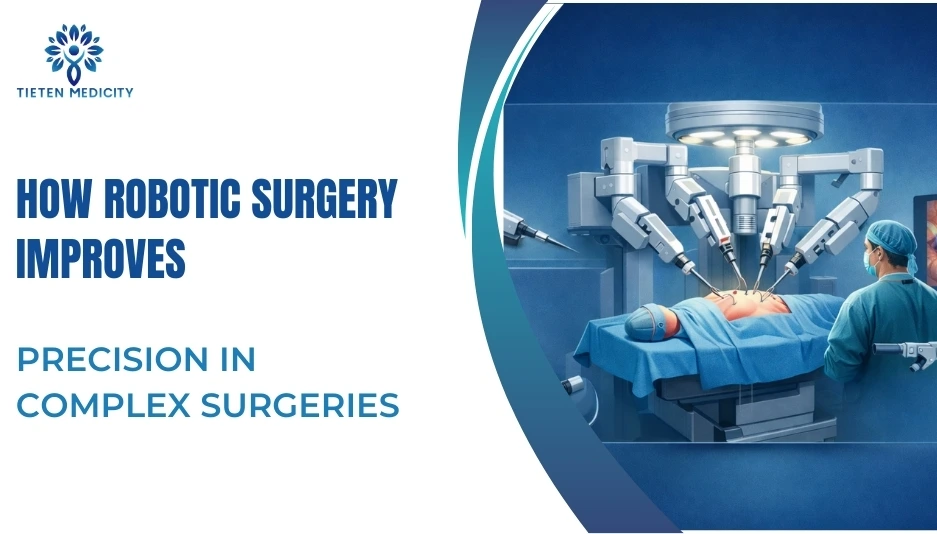
Robotic surgery leads the medical field through its ability to perform complex surgeries using advanced robotic systems which enhance surgical precision and safety during operations. The combination of surgeon expertise with robotic systems in robotic-assisted surgery enables surgeons to achieve superior precision and control during operations which require high levels of accuracy.
Robotic surgery serves as a surgical procedure which enables doctors to execute operations through small body openings by using computer-based robotic systems. Robots do not function independently from human operators because this misconception exists. The surgeon who has received advanced training operates every robotic arm movement while using technology to improve his decision-making process.
Robotic-assisted surgery provides major advancements for surgical accuracy during all types of surgical procedures. The advanced technology empowers surgeons to operate with greater control and confidence, which decreases their performance mistakes. The following elements provide precision improvements for the system:
The human hand has less adaptable movement capacity than robotic systems which enable full-range motion.
The system enables continuous hand control through movement which removes natural hand tremors.
The system enables precise control within restricted spaces and complex body structures.
The system protects nearby healthy tissue from harm through its various operations.
The system enhances operational safety for work that occurs close to vital nerves and blood vessels.
The system displays surgical sites through high-definition 3D magnification.
The system increases visibility to see detailed anatomical features.
The system enables better tissue identification together with nerve and blood vessel detection.
The system helps surgeons make decisions during difficult operations.
The system enhances accuracy while safeguarding intact biological tissues.
The traditional surgical techniques used for complex procedures need to create extensive surgical cuts which result in greater patient pain and blood loss and extended recovery periods. Robotic surgery uses small keyhole incisions which create less physical damage to the patient’s body. The minimally invasive technique produces smaller scars and decreases infection risks while enabling patients to heal more quickly.
Minimally invasive methods produce less tissue harm because they require less surgical intervention.
The procedure leads to decreased pain and blood loss during the postoperative period.
The procedure decreases both infection rates and overall medical complications.
The procedure decreases the duration of hospital confinement which follows surgical procedures.
The treatment method allows for speedier recovery and faster resumption of normal life activities.
Robotic systems exist to enhance surgeon ergonomic conditions during their surgical work. The system enables surgeons to complete their work while seated at the console, which allows them to decrease physical stress during their lengthy complex surgical procedures. Better comfort allows surgeons to maintain focus and consistency which directly leads to both improved precision and enhanced patient safety.
Robotic surgery brings precise and safe and minimally invasive medical solutions to contemporary healthcare systems. Tieten Medicity uses advanced medical technology and skilled surgical professionals to achieve success in difficult surgical operations.
Robotic surgery has redefined precision in complex surgeries through its improved accuracy and enhanced visualization and better control mechanisms which reduce patient trauma. The combination of advanced technology and surgical knowledge in robotic-assisted surgeries creates new standards for successful surgical results and patient recovery which have become essential elements of today’s surgical procedures.
1. What is robotic surgery, and is a robot doing my operation?
Robotic surgery is performed by a trained surgeon, not by a robot on its own. The surgeon controls robotic instruments using a console, allowing very precise movements during surgery.
2. How does robotic surgery improve precision in complex surgeries?
Robotic systems provide steady, highly controlled movements and magnified 3D views. This helps surgeons operate accurately in delicate or hard-to-reach areas while protecting nearby nerves and tissues.
3. Is robotic surgery safer than traditional open surgery?
For many complex procedures, robotic surgery can be safer because it uses smaller incisions, causes less bleeding, and reduces the risk of damage to healthy tissues when performed by an experienced surgeon.
4. Will robotic surgery help me recover faster?
Yes, most patients experience less pain, smaller scars, shorter hospital stays, and quicker recovery compared to traditional open surgery, thanks to the minimally invasive approach.
5. Is robotic surgery suitable for everyone?
Not all patients or conditions require robotic surgery. Your surgeon will evaluate your medical condition, overall health, and surgical needs to decide if robotic surgery is the best option for you.
Dedicated to providing exceptional care with compassion and innovation. Our state-of-the-art facility offers a wide range of medical services and specialties to ensure the best outcomes for our patients. Committed to your health and well-being, we’re here to support you every step of the way.
© 2026, TIETEN MEDICITY. All Rights Reserved.
 Call Now!