
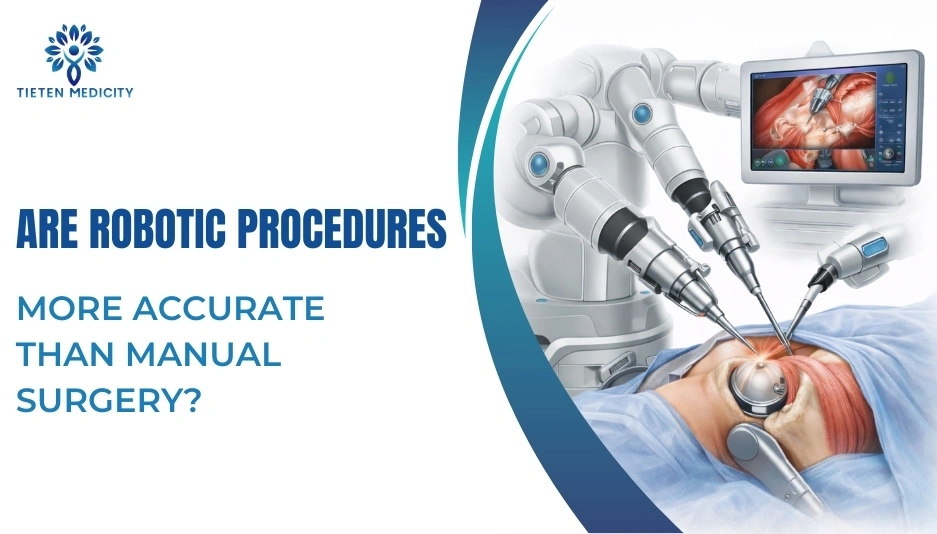
Medical technology made major advancements through robotic-assisted surgical systems which were first introduced during the past few years. Patients and surgeons both want to know whether robotic surgery methods provide higher surgical accuracy compared to standard manual operation techniques. The advantages and disadvantages of robotic surgery systems help patients choose their treatment options.
Precision and Control
Robotic surgery delivers its most important advantage through its ability to perform operations with higher surgical accuracy. Surgeons who use robotic systems for their operations gain access to uninterrupted system movement which allows them to perform operations with exact control. The systems enable surgeons to perform their work with precision that reaches millimeter accuracy which proves essential for their work in sensitive operations that include cardiac and urological and neurological procedures.
Key advantages include:
Minimized hand tremors: Robots eliminate the natural shakiness of human hands.
Micro-movements: Tiny, precise movements that are difficult to perform manually.
Enhanced dexterity: Robotic arms can rotate and maneuver in ways human hands cannot.
Improved Visualization
Robotic-assisted surgery typically uses high-definition 3D cameras to deliver an enlarged view of the surgical area to surgeons. The enhanced visualization technology enables surgeons to examine tissues, blood vessels and vital structures with improved accuracy. Surgeons who perform manual surgery need to use traditional 2D methods or direct visual inspection which restricts their ability to see inside narrow or complicated regions.
Advanced visualization technology provides the following advantages:
3D magnification for clear views of the operative field.
The system enables users to differentiate between intact and injured skin areas with greater precision.
The system helps surgeons find possible surgical complications during their procedures.
Reduced Risk of Complications
Surgical accuracy directly enhances patient safety. The use of robotic-assisted operations decreases human error possibilities which leads to decreased chances of medical complications that include tissue damage and excessive blood loss.
The safety benefits of the system include the following advantages:
The system achieves better surgical outcomes through its ability to perform precise cutting and suturing techniques which minimize unintentional damage to tissues.
The use of smaller incisions results in decreased chances of infection occurring.
Minimally invasive procedures provide patients with quicker recovery times.
Limitations of Robotic Surgery
Robotic procedures show high accuracy but they contain certain restrictions. The surgical process requires expert training which increases its costs above standard manual surgical methods.
The robotic system requires complete surgical proficiency because both experience and skill of the surgeon determine its operational capabilities.
The following factors need assessment:-
Robotic equipment availability and cost
Surgeon ability to use robotic systems
Assessment of procedure compatibility with robotic surgery.
Conclusion
Robotic-assisted surgeries provide enhanced accuracy, improved visualization, and reduced risk of complications which exceed the capabilities of manual surgery. Robotic systems serve as advanced tools that enhance human capability in complex delicate procedures although they cannot substitute for human surgeon expertise.Patients should consult their healthcare provider to evaluate surgical options before making a decision about robotic assistance as their optimal treatment method.
FAQs (Frequently Asked Questions)
1. Are robotic surgeries really more accurate than manual surgery?
Robotic-assisted surgery can offer higher precision in many complex procedures. The system allows steady, controlled movements and better visualization, which helps surgeons operate more accurately, especially in delicate areas.
2. How does robotic surgery improve surgical accuracy?
Robotic systems reduce natural hand tremors and allow very fine, precise movements. They also provide magnified 3D views of the surgical area, helping surgeons clearly see tissues, nerves, and blood vessels.
3. Does higher accuracy mean fewer complications?
In many cases, yes. Greater precision may reduce accidental tissue damage, blood loss, and infection risk. Smaller incisions used in robotic surgery can also support faster healing and recovery.
4. Is robotic surgery completely automated?
No. The surgeon is always in control. The robotic system does not act independently; it follows the surgeon’s hand movements and enhances control and stability during the procedure.
5. Is robotic surgery better for every patient?
Not necessarily. The best surgical approach depends on your medical condition, overall health, and the surgeon’s recommendation. Your doctor will advise whether robotic-assisted surgery is suitable for your specific case.
Dedicated to providing exceptional care with compassion and innovation. Our state-of-the-art facility offers a wide range of medical services and specialties to ensure the best outcomes for our patients. Committed to your health and well-being, we’re here to support you every step of the way.
© 2026, TIETEN MEDICITY. All Rights Reserved.
 Call Now!