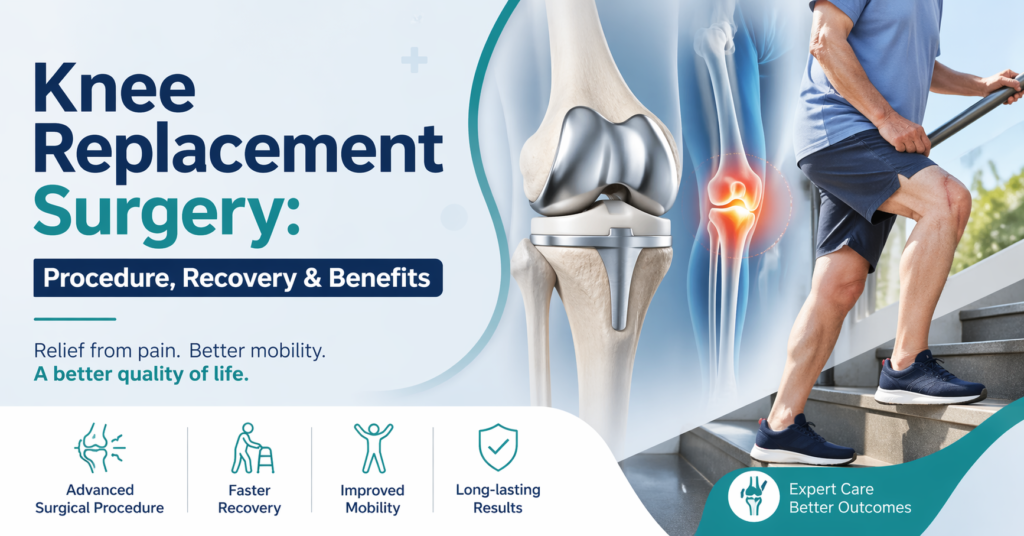
Knee pain doesn’t arrive all at once. It builds slowly – first as stiffness while climbing stairs, then discomfort during long walks, and eventually pain even while resting. For many people, especially those dealing with long-term arthritis or injury, daily movement starts feeling like a task rather than something natural.
That’s where knee replacement surgery comes into the picture. It’s not just a medical procedure – it’s often a turning point where people regain independence, movement, and a better quality of life.
This guide breaks everything down in a simple, real way — what the surgery involves, who needs it, how recovery works, and what results you can realistically expect.
Knee replacement surgery (also called knee arthroplasty) is a procedure where a damaged knee joint is replaced with an artificial implant.
The goal is simple:
During the surgery, the worn-out cartilage and damaged bone are removed and replaced with metal and plastic components that act like a new joint.
There are two main types:
Most patients undergo total replacement, especially when arthritis affects the entire joint.
Not every knee pain leads to surgery. Doctors usually recommend it when conservative treatments stop working.
Common signs include:
The most common causes:
If daily life starts getting restricted, surgery becomes a practical option rather than a last resort.
Understanding the process removes a lot of fear. Here’s what typically happens:
1. Pre-Surgery Preparation
2. Anesthesia
You’ll either receive:
3. Surgical Procedure
4. Closing the Incision
5. Immediate Recovery
The surgery usually takes 1–2 hours, depending on complexity.
People often worry if the surgery is worth it. For most patients, the difference is significant.
Key benefits:
Recovery is where real transformation happens – and it requires effort.
Hospital Stay
First Few Weeks
4–6 Weeks
3 Months
6 Months+
Recovery isn’t instant — but steady progress is what matters.
Like any surgery, there are risks, though they are relatively low when done by experienced surgeons.
Possible complications include:
Most of these can be managed or prevented with proper care and follow-up.
Many people expect to feel “perfect” immediately — but real life is more gradual.
What improves:
What to avoid:
Low-impact activities like walking, cycling, and swimming are usually encouraged.
Before surgery:
After recovery:
The difference isn’t just physical — it affects overall well-being.
Costs can vary based on:
In India, knee replacement is widely available and more affordable compared to many other countries, making it accessible for many patients.
If you’re exploring treatment options in Thane, you can learn more about advanced care and surgical options here:
👉 https://www.tietenmedicity.com/knee-replacement-in-thane/
This decision matters more than anything else.
Look for:
A good setup ensures smoother surgery and faster recovery.
Doctors always evaluate risks before recommending surgery.
Even after recovery, care continues.
Your new knee needs maintenance — just like any other part of your body.
Knee pain can slowly take away your independence without you even realizing it. Many people delay surgery out of fear, but modern knee replacement surgery is safe, effective, and life-changing for the right candidates.
If your knee is limiting your daily life, it might be time to explore your options. For more detailed consultation and treatment insights, you can check:
👉 https://www.tietenmedicity.com/knee-replacement-in-thane/
The procedure usually takes around 1 to 2 hours, depending on the complexity.
Pain is managed with medication. Most patients feel discomfort initially, but it reduces significantly during recovery.
With proper physiotherapy, many patients walk independently within 4–6 weeks.
Modern implants can last 15–25 years or even longer with proper care.
Yes, in some cases, bilateral knee replacement is done, but it depends on the patient’s health condition.
It has a high success rate, often above 90%, especially when done in experienced centers.
Most daily activities can be resumed within 6–8 weeks, but full recovery may take a few months.
Yes, including physiotherapy, medications, and injections – but they may not work in advanced cases.