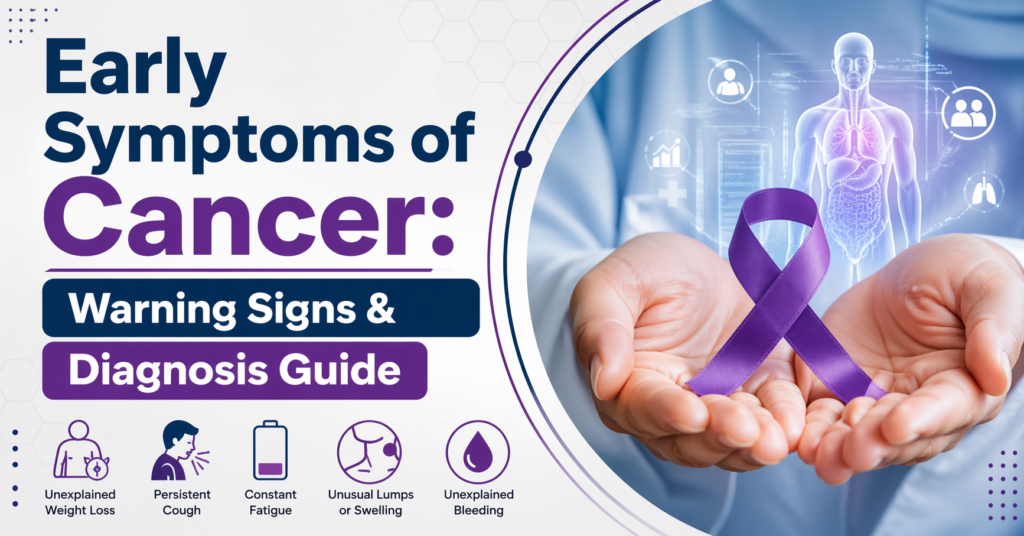
Early symptoms of cancer are often subtle, easy to ignore, and sometimes mistaken for everyday health issues. That’s exactly why many cases get diagnosed late—when treatment becomes more complicated.
This guide is written to help you notice those small changes your body might be trying to tell you. Because in cancer care, early detection doesn’t just improve outcomes—it can save lives.
Early symptoms of cancer are unusual physical or internal changes that persist without a clear reason. These signs don’t always mean cancer, but they shouldn’t be ignored either-especially if they last for weeks.
Cancer develops when abnormal cells start growing uncontrollably. In the early stages, the body may show mild warnings before the condition progresses.
👉 The key is not panic-but awareness.
Here are some of the most commonly reported early signs:
1. Unexplained Weight Loss
Losing weight without trying might feel like a good thing—but medically, it’s a red flag.
If you drop 5–10% of your body weight within a few months without changes in diet or exercise, it needs evaluation.
2. Persistent Fatigue
This isn’t just “feeling tired.” Cancer-related fatigue:
3. Lumps or Swelling
Any new lump in:
should be checked. Not all lumps are cancerous, but early testing is important.
4. Persistent Pain
Pain that:
can be an early sign of underlying disease.
5. Changes in Skin
Watch for:
6. Unusual Bleeding
This includes:
7. Changes in Bowel or Bladder Habits
Long-term changes like:
can signal deeper issues.
8. Persistent Cough or Hoarseness
A cough lasting more than 3 weeks—especially with chest pain or breathlessness—should not be ignored.
Different cancers show different early signs. Here’s a quick breakdown:
Lung Cancer Symptoms
👉 Often confused with common respiratory infections.
Breast Cancer Symptoms
Colorectal Cancer Symptoms
Cervical Cancer Symptoms
Oral Cancer Symptoms
Early-stage cancer is usually:
Late-stage cancer often spreads (metastasis), making treatment more complex.
👉 That’s why recognizing early symptoms of cancer is critical.
Don’t wait for symptoms to become severe.
Consult a doctor if:
Trust your instincts.
For expert evaluation and advanced care, you can explore services here:
👉 https://www.tietenmedicity.com/service/cancer-treatment-in-thane/
Diagnosis involves multiple steps depending on symptoms:
1. Physical Examination
The doctor checks visible and physical signs.
2. Blood Tests
Certain cancers affect blood counts and markers.
These help locate abnormal growths.
4. Biopsy
A small tissue sample is tested to confirm cancer.
👉 This is the most accurate method for diagnosis.
Treatment depends on:
Common methods include:
1. Surgery
Used to remove tumors.
2. Chemotherapy
Uses drugs to kill cancer cells.
3. Radiation Therapy
Targets cancer with high-energy rays.
4. Targeted Therapy
Focuses on specific cancer cells without harming normal cells.
Boosts the body’s immune system to fight cancer.
For advanced and personalized treatment options, you can check:
👉 https://www.tietenmedicity.com/service/cancer-treatment-in-thane/
Not all cancers are preventable, but some risks can be reduced.
Common Risk Factors:
Simple Ways to Reduce Cancer Risk
👉 Prevention and early detection go hand in hand.
The biggest mistake people make is ignoring early signals.
Cancer rarely appears overnight. It develops slowly-and the body often gives warnings. The sooner you act, the better your chances of recovery.
If something feels off, don’t delay. Getting checked early can make all the difference.
Early symptoms may include unexplained weight loss, fatigue, lumps, persistent pain, and unusual bleeding.
Most cancers develop gradually. Symptoms often start mild and worsen over time.
No, but persistent and unexplained fatigue should be evaluated.
If symptoms persist for more than 2–3 weeks, it’s best to consult a doctor.
No. Many lumps are benign, but they should always be checked.
There is no single test. Diagnosis depends on symptoms and may include imaging, blood tests, and biopsy.
Yes. While risk increases with age, cancer can occur at any age.
Healthy lifestyle habits, avoiding tobacco, and regular screenings help reduce risk.
Many early-stage cancers are highly treatable and even curable.
Not every symptom means cancer—but ignoring persistent ones is risky. It’s better to get checked.