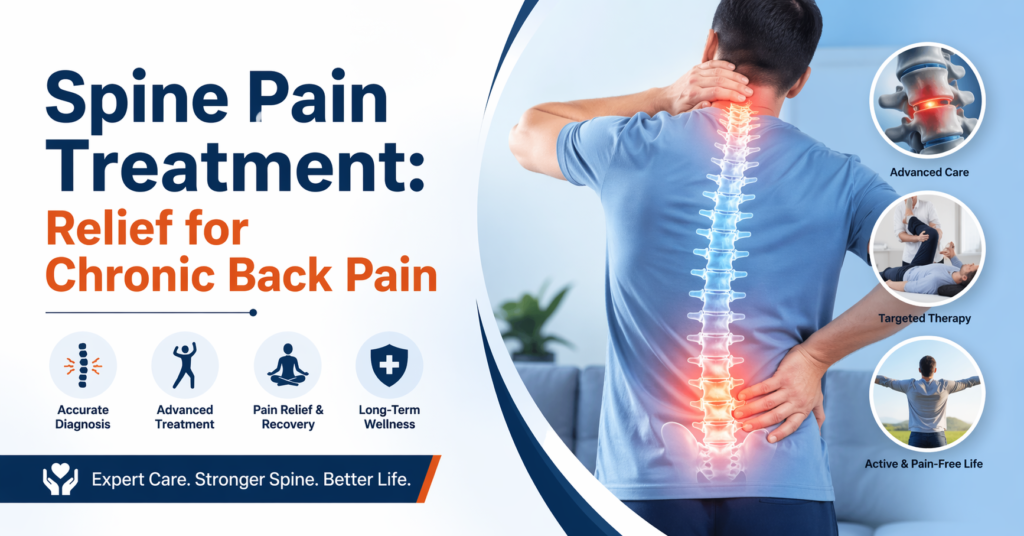
Spine pain is one of those things that quietly takes over your life. It starts small – maybe a dull ache after a long day – and before you know it, sitting, walking, even sleeping becomes uncomfortable. If you’ve been dealing with this, you’re not alone. Millions struggle with it daily, but the good part is this: the right spine pain treatment can genuinely change how you feel and function.
This guide breaks things down in a simple, real-world way – what causes spine pain, how to recognize warning signs, and most importantly, what actually works when it comes to treatment and long-term relief.
People often use “back pain” as a general term, but spine pain is more specific. It can affect different parts of your spine:
Each section behaves differently, which is why treatment isn’t one-size-fits-all.
Spine pain rarely comes out of nowhere. There’s usually a trigger or a pattern behind it.
1. Muscle Strain & Poor Posture
Sitting for long hours, especially with bad posture, puts constant stress on your spine. Over time, muscles tighten and pain starts to build.
2. Herniated or Slipped Disc
This happens when the soft cushion between your vertebrae pushes out and presses on nearby nerves. It often causes:
3. Degenerative Disc Disease
As you age, spinal discs lose flexibility and cushioning. This leads to chronic discomfort and stiffness.
4. Spinal Stenosis
A condition where the spinal canal narrows, putting pressure on nerves. Common in older adults.
5. Injury or Trauma
Accidents, falls, or sports injuries can affect spinal alignment and cause long-term issues.
6. Lifestyle Factors
All of these quietly contribute to worsening spine health.
Some pain is manageable, but certain signs need attention:
If you’re experiencing these, it’s time to seriously consider proper spine pain treatment rather than relying on temporary relief methods.
Treatment depends on the cause, severity, and duration of your pain. The goal is not just relief, but long-term improvement.
1. Medication-Based Relief
Doctors may suggest:
These help reduce discomfort, but they don’t fix the root problem. Think of them as short-term support.
2. Physiotherapy (One of the Most Effective Approaches)
Physiotherapy focuses on strengthening and correcting the body.
Typical plan includes:
Consistency matters here. Many people quit too early and miss real results.
3. Lifestyle Adjustments (Underrated but Powerful)
Small changes make a big difference:
These habits reduce pressure on your spine daily.
4. Advanced Non-Surgical Treatments
For moderate to severe cases:
These options are often used when basic treatments don’t provide enough relief.
5. Surgical Treatment (When Necessary)
Surgery is usually the last option, but it can be life-changing for the right cases.
Common procedures:
Modern techniques, including minimally invasive and robotic-assisted surgeries, have improved recovery times significantly.
If you’re exploring expert-level care and advanced treatment options, you can check specialized spine care under neurosurgical services here:
https://www.tietenmedicity.com/service/neuro-surgeon-in-thane/
Chronic pain isn’t just about injury — it’s often about habits.
Reasons it becomes long-term:
The body remembers patterns. If you don’t change them, pain returns.
Treating spine pain is one thing. Keeping it away is another.
Build Core Strength
Your core supports your spine. Weak muscles = more pressure on your back.
Stay Active
Complete rest often makes things worse. Controlled movement helps recovery.
Manage Weight
Extra weight increases spinal load, especially on the lower back.
Fix Daily Habits
From how you sit to how you lift objects — everything matters.
Reduce Stress
Stress tightens muscles, especially around the neck and shoulders.
Don’t wait too long. You should consult a specialist if:
For expert evaluation and advanced treatment planning, consulting a spine specialist or neurosurgeon can give clarity and direction. You can explore professional consultation options here:
https://www.tietenmedicity.com/service/neuro-surgeon-in-thane/
The best spine pain treatment is often prevention.
Simple habits:
These don’t take much time, but they protect your spine long-term.
Spine pain doesn’t just affect your body — it impacts your energy, focus, mood, and daily life. The good news is, you don’t have to live with it.
The right approach combines:
Whether your pain is mild or chronic, taking action early can prevent bigger problems later. Listen to your body — it usually gives signs before things get serious.
A combination of physiotherapy, lifestyle changes, and targeted medical treatment works best. The key is consistency, not quick fixes.
Mild cases may improve with rest and care, but persistent pain usually needs proper evaluation and treatment.
If you have numbness, weakness, or pain lasting more than a few weeks, it’s best to consult a specialist.
No. Most cases are treated without surgery. Surgery is only considered when other treatments fail or in severe conditions.
Stretching, core strengthening, and low-impact exercises like walking or swimming are helpful. A physiotherapist can guide you better.
Yes, and it’s one of the most common reasons. Long-term poor posture puts continuous stress on your spine.
Recovery depends on the cause. Some people improve in weeks, while chronic conditions may take months with proper treatment.