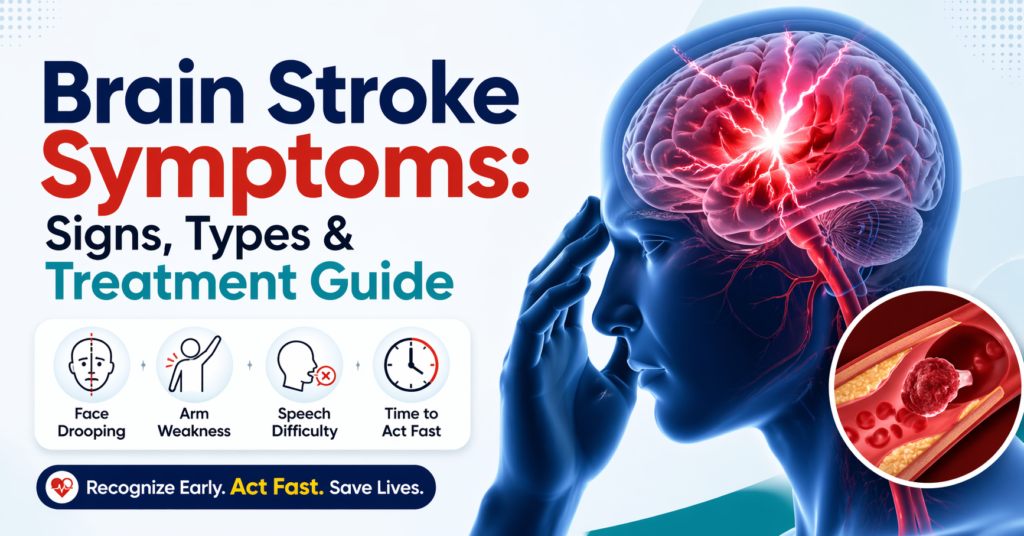
Brain stroke symptoms often arrive without warning-but the body almost always gives signals before serious damage begins. The difference between a quick recovery and long-term disability usually comes down to one thing: how fast those signals are recognized and acted upon.
This guide breaks things down in a simple, real-world way-what a stroke actually is, what signs to look for, the types, causes, and what treatment looks like when every minute matters.
A brain stroke happens when blood flow to a part of the brain is interrupted. Without oxygen, brain cells start dying within minutes.
There are two major ways this happens:
Both situations are serious. Both need immediate medical attention.
Here’s the truth-stroke symptoms are often subtle at first. People delay treatment thinking it’s “just dizziness” or “just weakness.”
That delay costs lives.
The FAST Rule (Simple & Life-Saving)
Other Common Brain Stroke Symptoms
👉 These symptoms usually appear suddenly, not gradually.
Understanding the type helps doctors decide treatment quickly.
1. Ischemic Stroke (Most Common)
2. Hemorrhagic Stroke
3. Transient Ischemic Attack (TIA)
👉 Many people ignore TIA symptoms. That’s a mistake.
It often comes before a full stroke.
Stroke isn’t random. It builds over time.
Common Causes
Risk Factors You Can’t Control
Modern Lifestyle Triggers (Often Ignored)
👉 These are becoming major contributors in younger patients.
Sometimes, the body gives a preview.
Watch out for:
These may disappear quickly—but they shouldn’t be ignored.
If you notice these signs, getting evaluated by a specialist is critical. You can consult experts through
👉 https://www.tietenmedicity.com/service/neurologist-in-thane/
This is not the time to “wait and watch.”
Immediate Action Steps
👉 Every minute without treatment = brain cells dying.
How Brain Stroke Is Diagnosed
Doctors don’t guess-they confirm quickly using:
Diagnosis happens fast because treatment depends on the stroke type.
Brain Stroke Treatment Options
Treatment depends on the type and timing.
1. Emergency Treatment (Golden Window)
For ischemic stroke:
👉 Timing is everything here.
2. Hemorrhagic Stroke Treatment
3. Rehabilitation (Long-Term Recovery)
Recovery doesn’t stop after hospital discharge.
It includes:
👉 Some patients recover fully. Others need long-term support.
Yes-and more easily than most people think.
Practical Prevention Steps
Regular Checkups Matter
Early detection of risk factors can prevent a stroke entirely.
For neurological evaluations and preventive care, you can explore
👉 https://www.tietenmedicity.com/service/neurologist-in-thane/
Recovery looks different for everyone.
Some regain full function. Others may experience:
What makes the biggest difference:
Stroke is no longer an “old age problem.”
Doctors are seeing:
👉 The warning signs are the same-but often ignored longer.
Brain stroke symptoms are not complicated-but they are easy to overlook.
A slight face droop. A weak arm. Slurred speech.
These may seem small in the moment-but they are signals that demand immediate action.
The sooner treatment begins, the better the outcome.
The earliest signs include face drooping, arm weakness, and slurred speech. Sudden confusion or vision issues may also appear.
Yes, in cases of TIA (mini-stroke), symptoms may disappear. But this is a warning sign and needs medical attention.
Ideally within 3 to 4.5 hours for best outcomes in clot-related strokes.
Some patients recover completely, especially with early treatment. Others may need rehabilitation depending on severity.
High blood pressure is the leading cause, followed by diabetes, cholesterol, and lifestyle factors.
Yes. Stress, poor lifestyle, smoking, and lack of physical activity are increasing stroke risk in younger individuals.
Avoid smoking, alcohol, unhealthy food, and skipping medications. Follow a structured recovery plan.
Stay active, eat healthy, manage stress, and monitor blood pressure regularly.